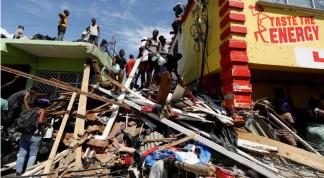
Days after Hurricane Melissa swept across the Caribbean, rescue operations in Jamaica continue under difficult conditions as floodwaters and debris block access to entire communities.
Information Minister Dana Morris Dixon confirmed that 19 people have died in Jamaica so far, while teams race to reach those still stranded and deliver much-needed food and medical aid.
The massive storm, one of the strongest ever recorded in the region, also killed at least 30 people in Haiti, according to local officials. In both countries, widespread flooding and collapsed infrastructure have left survivors isolated, without electricity or running water.
“There are entire communities that seem to be marooned and areas that seem to be flattened,” Dixon said, describing “devastating” scenes from western Jamaica. She noted that power is still out in much of the country as crews try to repair lines brought down by strong winds and falling trees.
Many residents are salvaging what little they can from damaged homes. Water and food supplies have become scarce in some places, forcing families to rely on emergency assistance. With roads cut off and communication networks down, relief efforts have been slow and dangerous.
Although operations at Kingston’s main airport have resumed, smaller regional airstrips closest to the worst-hit towns remain only partially open. Aid convoys are now moving supplies by road from the capital, but many routes remain impassable.
Satellite images taken after the storm show widespread destruction, with nearly all buildings wiped out in several coastal villages. Local accounts paint a grim picture of the aftermath. “Words can’t explain how devastating” the storm has been, residents told the BBC from western Jamaica.
Trevor ‘Zyanigh’ Whyte, speaking from White House in Westmoreland parish, said: “No one is able to get through to their loved ones. Everyone is just, you know, completely disconnected... Every tree is on the road, right, so you can’t get too far with the cars, not even a bicycle.”
In neighbouring Haiti, many deaths occurred when a river overflowed in Petit-Goave, washing away homes and vehicles. Officials said a full damage assessment is ongoing as some regions remain unreachable.
Interim UN coordinator for Haiti Gregoire Goodstein said around 15,000 people have taken refuge in more than 120 shelters across the country.
Cuba also faced dangerous conditions during the storm, with heavy rains and flooding affecting millions.
UN resident coordinator for Cuba Francisco Pichon said over 3 million people were “exposed to life-threatening conditions,” and 735,000 were “safely evacuated.” Although no deaths have been reported in Cuba, authorities said about 240 communities remain cut off by floodwaters and landslides.
Hurricane Melissa roared ashore in Jamaica on Tuesday with wind speeds of up to 185 mph (295 km/h) before moving westward across the Caribbean. The destruction left behind has triggered international pledges of support as recovery efforts begin.
The World Food Programme announced it is working with its partners to coordinate aid deliveries, including emergency food, cash, and supplies to Jamaica, Haiti, Cuba, and the Dominican Republic.
The United States said it has deployed a disaster response team to assist with rescue efforts and distribute essential items such as clean water, hygiene kits, and temporary shelters.
The United Kingdom also pledged £2.5 million ($3.36 million) in emergency funding to help the affected nations rebuild and recover.
As Jamaica and its neighbours assess the damage, Bermuda is now preparing for the storm’s arrival. The Bermuda Weather Service expects Melissa to hit as a category two hurricane late Thursday.
All schools in Bermuda have been closed, and government offices will remain shut until Friday afternoon as authorities issue safety warnings.
“Until the official ‘All Clear’ is issued, residents are urged to stay off the roads so Government work crews can safely assess and clear debris,” read an official public alert.
The full extent of Hurricane Melissa’s destruction is still being tallied, but early reports show thousands left homeless and entire communities washed away.
Across the Caribbean, nations are now turning from rescue to recovery as they brace for the long road ahead.






























